

VR Training Simulators
Enterprise-grade virtual reality training solutions that reduce costs, eliminate risk, and dramatically improve knowledge retention.
VR Training Simulator Development for Enterprise
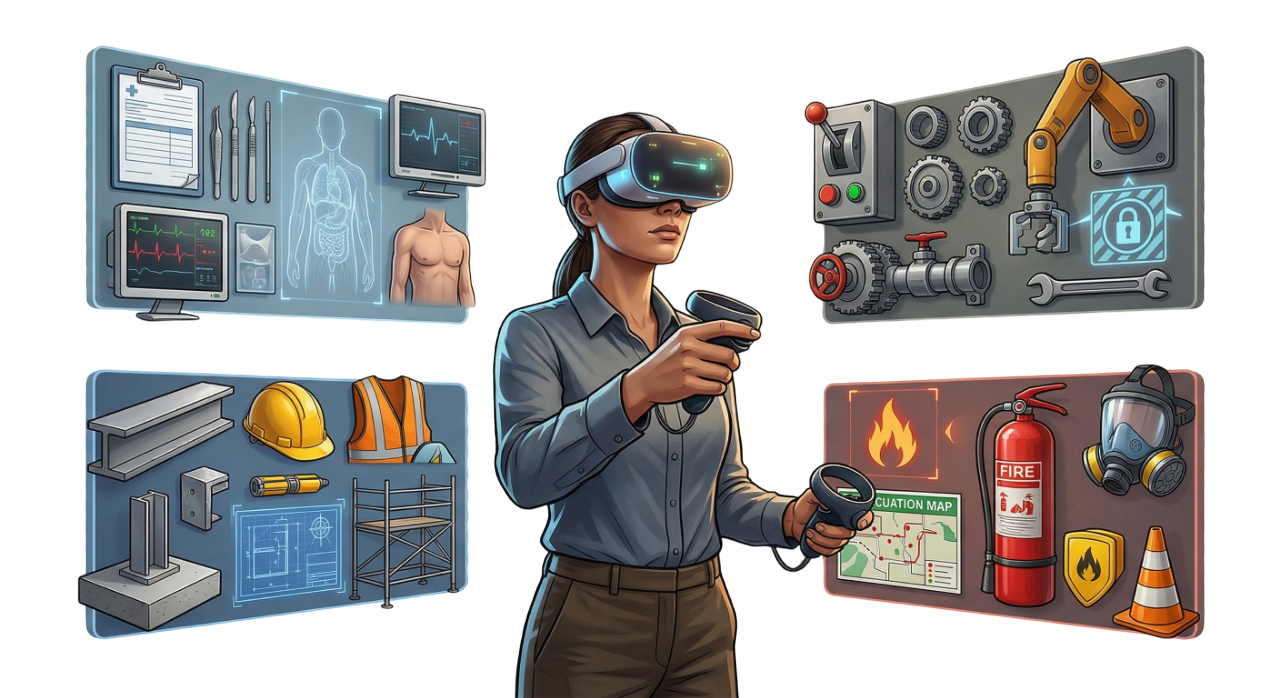
Raijin builds custom VR training simulators for healthcare, defense, manufacturing, aviation, and corporate enterprises. Our VR training solutions replace dangerous, expensive, or logistically impossible real-world training with immersive simulations that trainees can repeat infinitely at zero marginal cost. Studies show VR training improves knowledge retention by up to 75% compared to classroom learning — and our clients see 40–60% reductions in training time and costs.
What We Deliver
- Healthcare — surgical simulation, patient care, emergency response
- Defense & law enforcement — tactical training, de-escalation, mission rehearsal
- Manufacturing & industrial — equipment operation, safety drills, assembly line procedures
- Aviation & transportation — flight simulators, vehicle operation, emergency protocols
- Corporate & soft skills — leadership training, public speaking, sales coaching
- 75% higher retention vs classroom — with full analytics and performance tracking
Industry Use Cases
How organizations across industries leverage VR to train smarter, faster, and safer
Healthcare & Medical Training
Surgeons, nurses, and paramedics practice high-stakes procedures in realistic VR environments — from laparoscopic surgery to trauma triage — without risking patient safety. Trainees repeat procedures until mastery, with AI-driven performance scoring.
Defense & Law Enforcement
Military personnel and police officers train for high-risk scenarios — active shooter response, de-escalation, convoy operations, and battlefield medicine — in safe, repeatable VR environments with realistic stress simulation.
Manufacturing & Industrial Safety
Factory workers learn to operate heavy machinery, follow safety protocols, and respond to hazardous incidents — all in VR. Eliminate equipment damage risk during training and reduce workplace accidents by up to 43%.
Aviation & Transportation
Pilots, drivers, and logistics operators train in photorealistic VR simulators with real-time physics, weather systems, and emergency scenario injection — at a fraction of the cost of physical simulators.
Corporate & Soft Skills
Leadership development, DEI training, public speaking, and sales coaching through AI-driven VR scenarios. Employees practice difficult conversations, presentations, and customer interactions with virtual humans that react realistically.
Oil, Gas & Energy
Train rig operators, pipeline technicians, and plant workers on high-risk procedures in VR — offshore platform evacuations, well control, and hazardous material handling — without the dangers or logistics of on-site training.
Pharmaceutical & Lab Sciences
Lab technicians and researchers practice cleanroom protocols, chemical handling, and equipment operation in VR labs with accurate simulations of instruments, reactions, and contamination scenarios.
Construction & Heavy Equipment
Crane operators, excavator drivers, and construction workers learn machine operation, site safety, and structural assembly in VR — eliminating equipment rental costs and on-site risk during the training phase.
Our Development Process
A battle-tested process refined over 150+ projects
Training Needs Analysis
Identify learning objectives, current training gaps, compliance requirements, and success metrics with stakeholders
Instructional Design
Map learning outcomes to VR interactions — scenario branching, skill assessments, difficulty progression, and feedback loops
Environment & Asset Creation
Build photorealistic training environments, equipment models, virtual humans, and UI/UX for the training flow
Simulation Development
Physics systems, AI-driven scenario engines, haptic feedback integration, scoring algorithms, and platform SDK integration
SME Review & Validation
Subject matter experts validate realism, procedure accuracy, and training efficacy through iterative review cycles
Pilot Testing & Iteration
Deploy to a pilot group, collect performance data, gather qualitative feedback, and iterate on the training design
Enterprise Deployment & Analytics
MDM integration, LMS/LRS connectivity, admin dashboards, usage analytics, and ongoing content updates
Featured Work
A glimpse of the immersive experiences we've created.
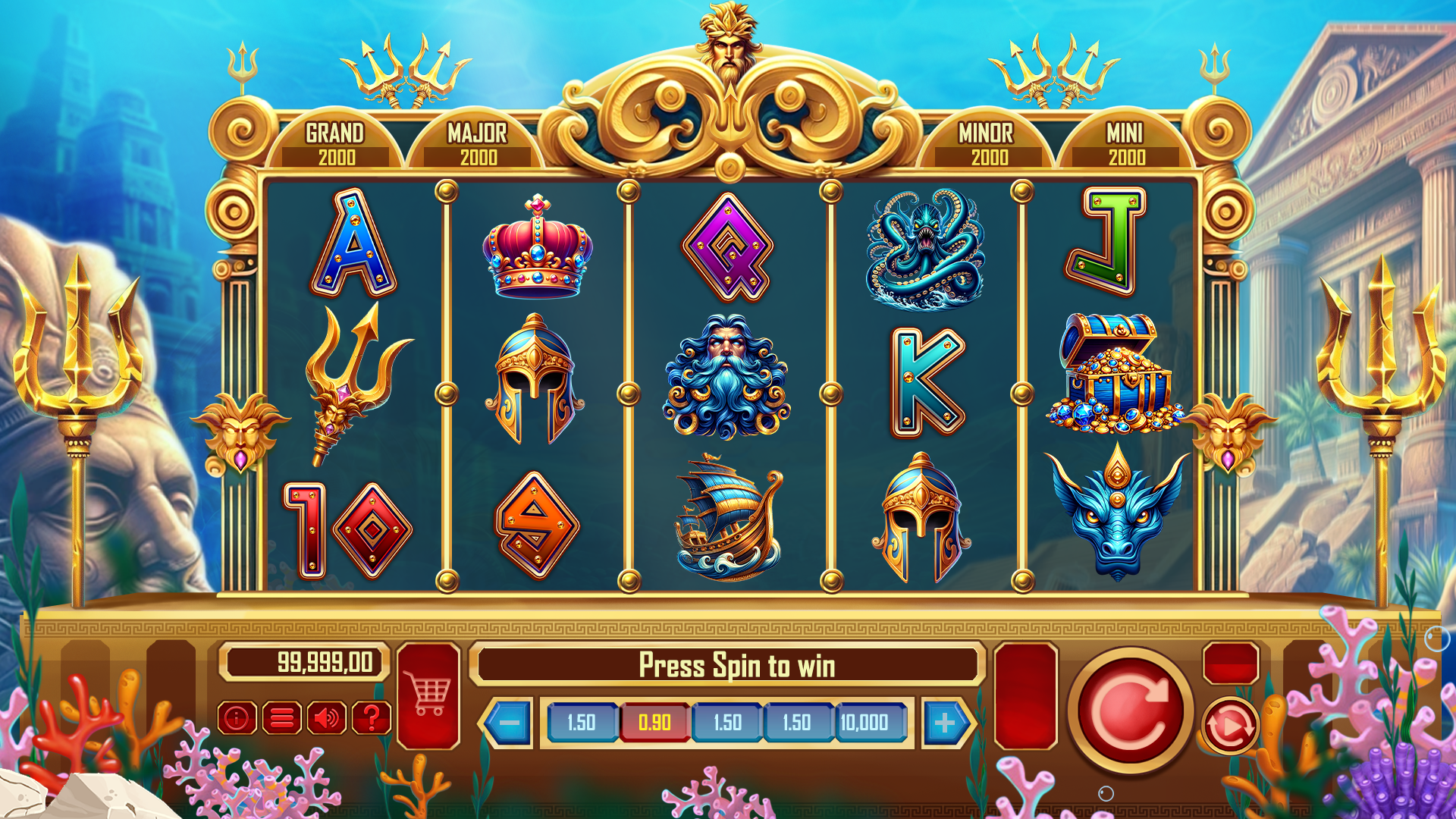
Casino & Slot Game Art
A showcase of our original slot & casino game art across 30+ themes — reel symbols, backgrounds, characters, and animated reel demos, from mythic epics to playful arcade styles, plus 3D fish-game art.
Toy Rush
Seat Circus
Why Choose Raijin
The edge that makes us different from every other studio
75% Better Retention
VR training delivers up to 75% higher knowledge retention compared to classroom or e-learning — trainees learn by doing, not watching
Zero Risk Training
Practice dangerous, high-stakes scenarios infinitely without any risk to people, equipment, or environment
40–60% Cost Reduction
Eliminate travel, equipment rental, instructor time, and consumable costs — VR training pays for itself within months
Full Analytics & Tracking
Every action is logged — time-to-completion, error rates, gaze heatmaps, and decision patterns feed into your LMS/LRS
Infinitely Repeatable
Trainees practice until mastery with adaptive difficulty — no scheduling constraints, no consumable costs per session
Global Scalability
Deploy identical training worldwide — every location, every trainee gets the same standardized experience
Tech Stack
Industry-standard tools and frameworks we use daily
Frequently Asked Questions
Everything you need to know before getting started
Simple single-scenario VR trainers start at $50,000–$100,000. Multi-scenario training suites with analytics range $100,000–$500,000. Enterprise-scale platforms with LMS integration, AI-driven scenarios, and ongoing content can exceed $500,000+. ROI typically shows within 6–12 months through reduced training costs.
A focused single-scenario trainer takes 3–5 months. Multi-scenario suites take 6–12 months. Enterprise platforms with full analytics and LMS integration take 12–18 months. We deliver pilot-ready builds at the 3–4 month mark for early validation.
Meta Quest 3 is ideal for scalable enterprise deployment — standalone, no PC required, MDM-compatible, and $500/unit. For higher-fidelity needs, PCVR with Varjo XR-4 or HTC Focus delivers photorealistic visuals. We design for your budget and scale requirements.
Yes. We integrate with SCORM 1.2/2004, xAPI (Tin Can), and custom LMS/LRS platforms. Training completions, scores, time-on-task, and detailed performance analytics sync directly to your learning management system.
We use Kirkpatrick's four-level evaluation model: reaction surveys, pre/post knowledge assessments, on-the-job behavior observation, and business impact metrics. Every VR session logs granular performance data for evidence-based validation.
Yes. We build modular content systems so new scenarios, equipment models, and procedures can be added without rebuilding the entire application. We offer ongoing content update retainers for clients with evolving training needs.
Ready to Build Your Game?
Tell us about your project and get a free consultation
Related Services
Explore more game development services we offer